A Calculation Is a Promise. Commissioning Keeps It.
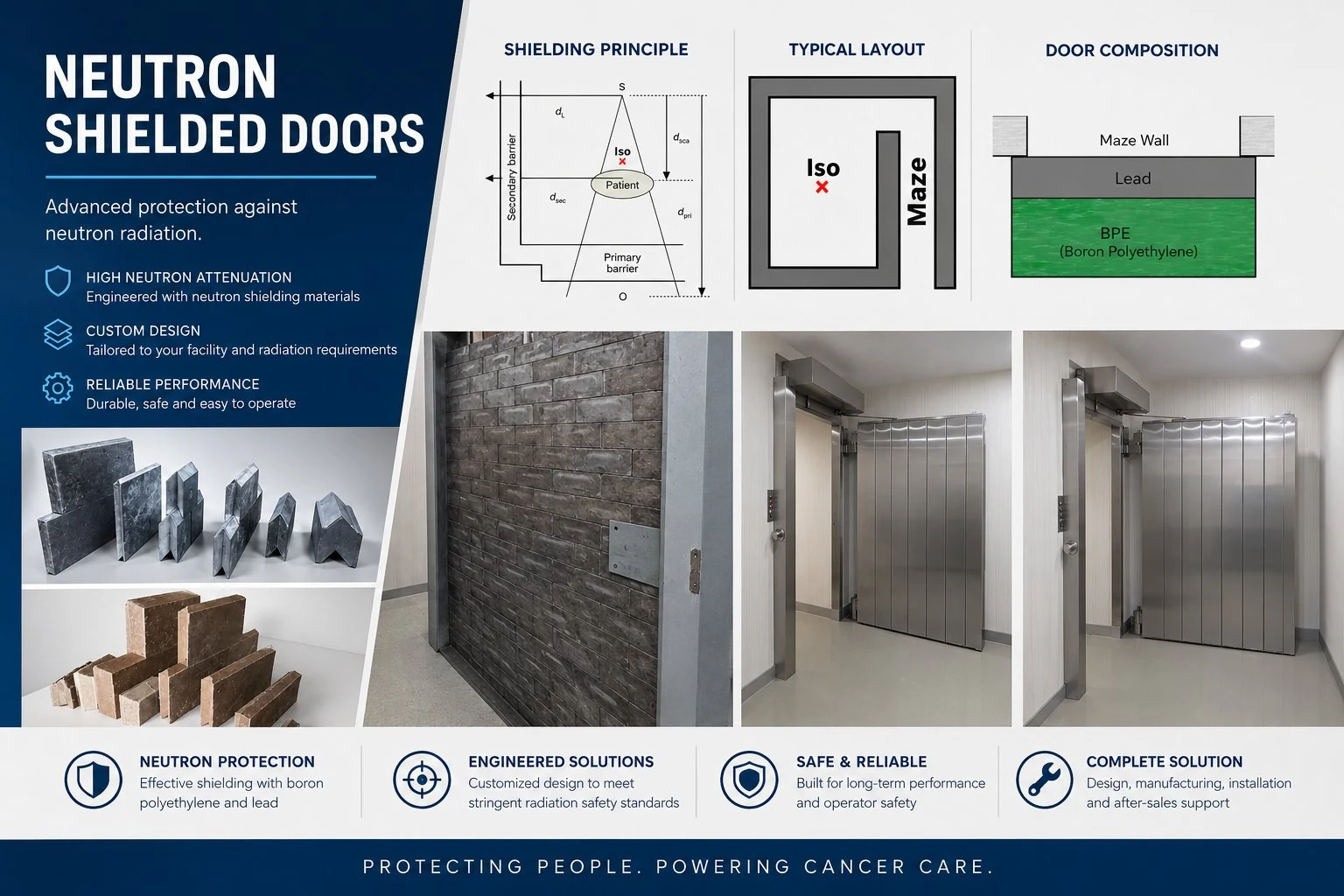
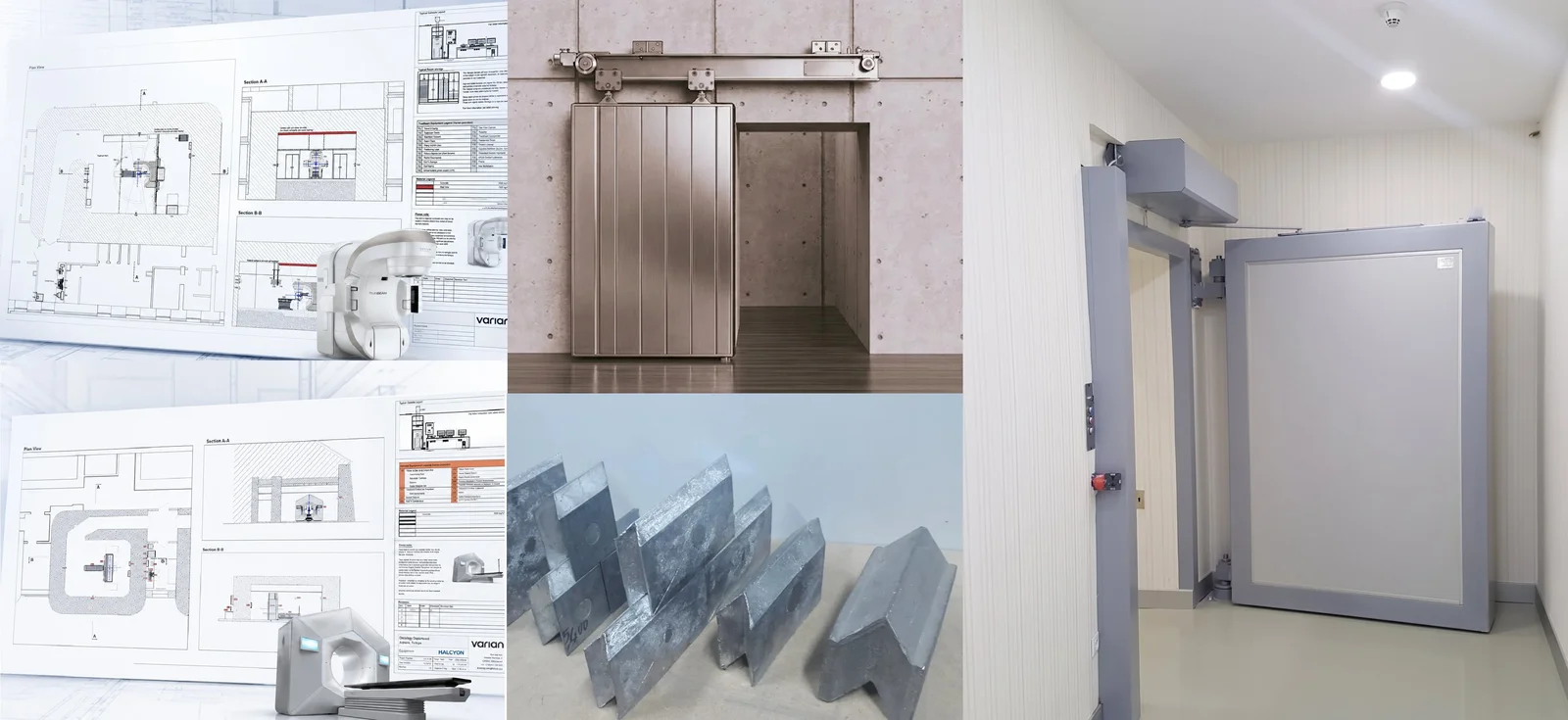
Every shielding project lives on paper until the day someone stands behind the closed door with a calibrated instrument while the machine runs at full output. Commissioning is that day, formalized: the structured program of radiation measurements, functional safety tests and documentation that verifies the installed vault, door and safety systems actually deliver what the NCRP 151 calculation promised — and that gives the regulator the evidence a license depends on. We treat it as a non-negotiable closing chapter of our own door and design projects, and offer it as a standalone service for facilities commissioning work supplied by others.
What Gets Measured and Tested
- Radiation surveys — photon dose measurements at all occupied positions around the vault at representative machine outputs, and neutron surveys at the door and maze for installations above 10 MV, compared point by point against the design goals of the shielding report
- Door and entrance verification — leakage checks across the closed leaf, edges and frame junctions, where shielding weaknesses actually hide
- Interlock and safety chain testing — functional verification that the beam cannot run with the door open, that opening the door terminates irradiation, that emergency stops, last-person-out procedures, warning lights and audible signals behave exactly as the safety design intends
- Mechanical safety verification — anti-crush protection, emergency manual operation and battery-backed release on powered doors, witnessed and recorded
- Documentation package — a survey and test report structured for regulatory submission, closing the loop between calculation, construction and measured reality
Aligned With the Regulatory Framework
Commissioning evidence is written for two audiences: the facility’s own radiation safety organization and the national authority that licenses it. We prepare documentation to the expectations of national radiation protection and medical-device quality-conformity frameworks — in Türkiye, the current regulatory regime for quality control of radiotherapy-group medical devices — and to international guidance from the IAEA and NCRP. Where the facility’s licensed medical physics or authorized quality-conformity organization must perform or witness specific tests, we coordinate scope with them so measurements are performed once, accepted by all parties, and never duplicated at the clinic’s expense.
When Commissioning Is Called For
New installations are the obvious case, but the discipline applies whenever the shielding situation changes: after an energy upgrade or machine replacement, after any modification to barriers, maze or door, after a door drive or interlock retrofit, and periodically as re-verification where regulations or internal QA programs require it. A measurement that takes a day is remarkably cheap insurance against operating for years on assumptions.
What You Receive at the End
The commissioning deliverable is a dossier, not a handshake: the measurement plan with instrument and calibration records, photon and neutron survey results mapped against the shielding report’s design goals position by position, functional test records for every interlock and safety element with pass criteria stated, deviations and their corrections documented to closure, and a signed summary structured for direct submission to your licensing authority. Facilities tell us the dossier’s quiet value appears years later — at re-licensing, after a modification, or when an inspector asks a question — when the answer is retrieved from a file instead of reconstructed from memory.