Introduction
Radiation shielding is one of the most critical aspects of radiotherapy facility design. Whether constructing a new cancer treatment center, upgrading an existing bunker, or designing a high-energy LINAC room, selecting the appropriate shielding material directly impacts safety, regulatory compliance, construction costs, and long-term operational performance.
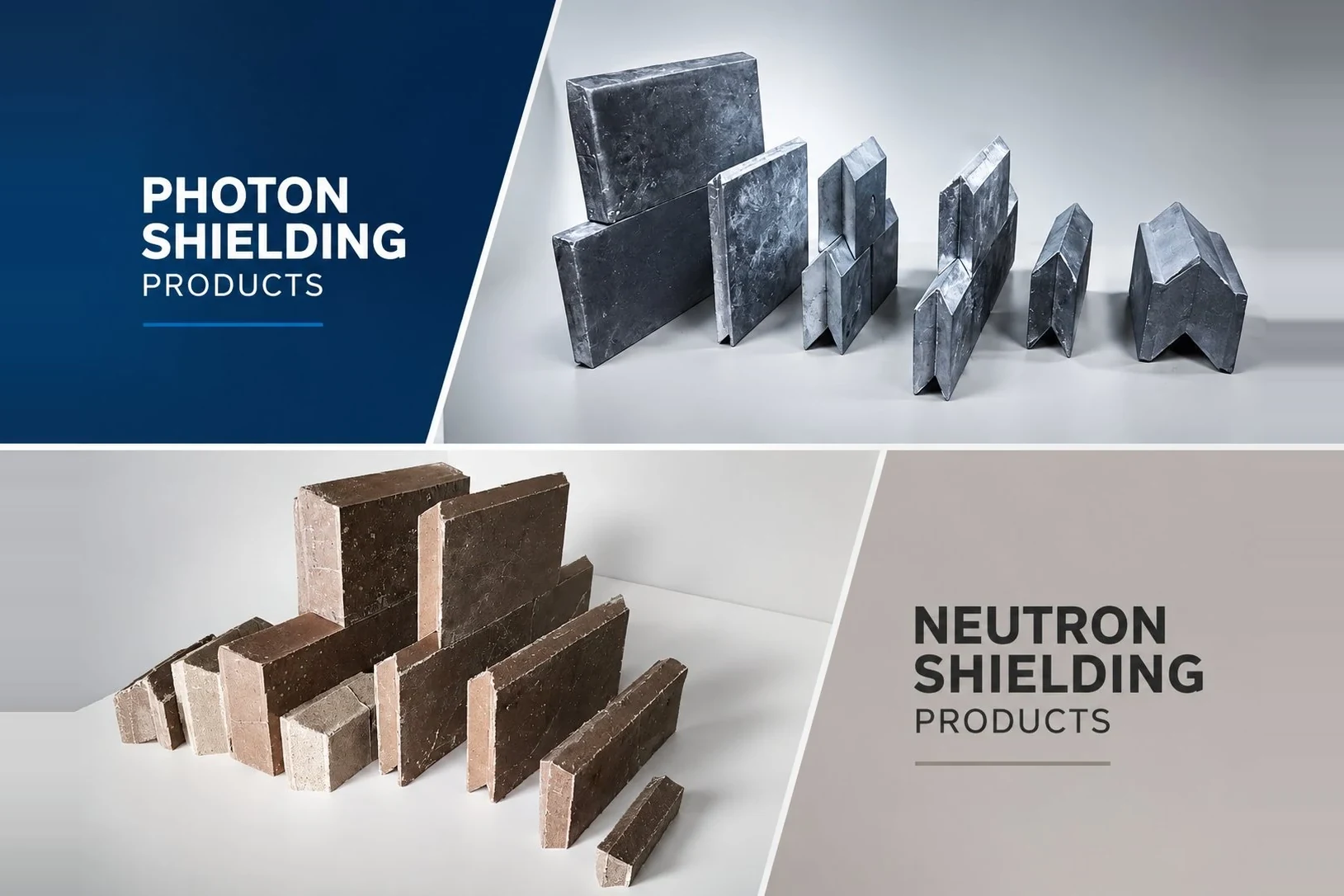
Among the most commonly used shielding materials, concrete and lead remain the industry standards for photon radiation protection. However, modern high-energy radiotherapy facilities often require additional neutron shielding materials such as Borated Polyethylene (BPE) to address photoneutron production.
Understanding the advantages and limitations of each shielding material is essential for creating safe and cost-effective treatment environments.
Understanding Radiation Shielding Requirements
Before selecting shielding materials, several factors must be evaluated:
- Treatment machine type
- Maximum beam energy
- Weekly workload
- Occupancy factors
- Distance to occupied areas
- Regulatory dose limits
- Facility layout
- Future expansion plans
Every radiotherapy project requires a customized shielding strategy based on these parameters.
Concrete Shielding: The Foundation of Radiotherapy Bunkers
Concrete is the most widely used shielding material in radiation oncology facilities worldwide.
Advantages of Concrete Shielding
- Cost-effective construction: concrete is generally more economical than lead when large shielding volumes are required.
- Structural function: unlike lead, concrete serves both as a structural element and a radiation barrier.
- Long-term durability: properly designed concrete structures can provide decades of maintenance-free shielding performance.
- Scalability: concrete shielding can be incorporated into walls, floors, and ceilings, making it ideal for complete bunker construction.
Limitations of Concrete Shielding
Concrete requires significant thicknesses to achieve high attenuation levels.
For high-energy LINAC facilities, wall thicknesses commonly range from:
- 1.5 to 2.5 meters for standard concrete
- Reduced thicknesses when using high-density concrete or barite concrete
This can increase building footprint and construction requirements.
Lead Shielding: Maximum Protection in Minimal Space
Lead remains one of the most effective shielding materials for gamma rays and high-energy photons.
Advantages of Lead Shielding
- High density: lead’s density allows substantial attenuation within relatively thin sections.
- Space efficiency: lead is particularly valuable where space is limited.
- Retrofit applications: lead can be installed without major structural modifications, making it ideal for renovation projects.
Common applications include:
- Radiation shielding doors
- Observation windows
- Localized shielding barriers
- Existing facility upgrades
Limitations of Lead Shielding
Lead is significantly more expensive than concrete on a large-volume basis and does not provide structural support. For this reason, lead is often used strategically rather than as the primary shielding material for entire bunkers.
Concrete vs Lead Shielding: Which Is Better?
The answer depends on the application.
Concrete Is Preferred For:
- Bunker walls
- Ceilings
- Floors
- New facility construction
- Large-scale shielding projects
Lead Is Preferred For:
- Shielding doors
- Shielding windows
- Penetrations
- Space-constrained environments
- Retrofit projects
In most modern radiotherapy facilities, the optimal solution combines both materials.
The Missing Piece: Neutron Shielding
For medical linear accelerators operating above 10 MV, photon shielding alone is not sufficient. High-energy LINAC systems can generate photoneutrons that require specialized shielding materials.
Unlike photons, neutrons interact differently with matter and cannot be effectively controlled by lead alone. This is where Borated Polyethylene (BPE) becomes essential.
What Is Borated Polyethylene (BPE)?
Borated Polyethylene is a hydrogen-rich shielding material containing boron compounds specifically designed to attenuate neutron radiation. The hydrogen content slows neutrons through scattering, while boron efficiently captures thermalized neutrons.
Benefits of BPE
- Excellent neutron attenuation
- Lightweight compared to concrete
- Easy integration into shielding doors
- Effective for maze entrance protection
- Long-term performance stability
Because of these characteristics, BPE is widely used in high-energy radiotherapy facilities worldwide.
Why Lead Alone Cannot Stop Neutrons
One of the most common misconceptions in radiation shielding is that thicker lead automatically provides better overall protection. While lead is highly effective against photon radiation, it provides limited protection against neutrons.
In fact, high-energy neutron environments often require a multilayer shielding strategy consisting of:
- Lead for photon attenuation
- Borated Polyethylene for neutron attenuation
- Structural steel reinforcement
- Radiation-tight sealing systems
This combination is frequently used in high-energy LINAC bunker doors.
Radiation Shielding Doors for High-Energy LINAC Facilities
Modern radiation shielding doors often combine multiple materials to address different radiation components.
Typical door configurations may include:
- Lead shielding core
- Borated Polyethylene neutron layer
- Structural steel frame
- Precision sealing systems
This integrated approach provides protection against:
- Primary photon radiation
- Leakage radiation
- Scattered radiation
- Secondary neutron radiation
Optimizing Shielding Performance and Cost
The most successful shielding projects balance:
- Safety
- Regulatory compliance
- Construction cost
- Available space
- Operational efficiency
Rather than relying on a single shielding material, modern facilities increasingly use engineered combinations of concrete, lead, and neutron shielding materials to achieve optimal performance.
Conclusion
The debate between concrete vs lead shielding is not about choosing one material over the other. The most effective radiation protection systems combine the strengths of multiple shielding materials.
Concrete remains the preferred solution for large structural barriers, while lead provides high-performance shielding where space is limited. For high-energy LINAC facilities, Borated Polyethylene and other neutron shielding materials become essential components of a comprehensive radiation protection strategy.
Whether designing a new radiotherapy bunker, upgrading an existing treatment room, or developing advanced radiation shielding doors, selecting the right combination of materials ensures safety, compliance, and long-term operational success.
Planning a radiotherapy shielding project?
Our engineers respond to technical inquiries within one business day — shielding calculations, door specifications and full project quotations.
Request a Technical Quote →