Why Photon Shielding Is the Foundation of Every Radiotherapy Facility
Every medical linear accelerator — regardless of manufacturer, model or energy level — generates photon radiation. It is the primary treatment beam that destroys cancer cells, and it is also the radiation component that every wall, ceiling, floor and door of a radiotherapy bunker must be designed to contain. While neutron shielding only becomes necessary above approximately 10 MV, photon shielding is required for all LINAC energies, from compact 6 MV systems such as Halcyon and Ethos to 18 MV dual-energy machines.
For hospital planners, medical physicists and project managers, understanding how photon shielding works — and how it is calculated — is essential for making informed decisions about bunker design, door specification and project budget. This guide explains the physics, the materials, the methodology and the practical engineering decisions behind effective photon protection.
The Physics: How Photon Radiation Is Attenuated
Photon radiation in the megavoltage range interacts with shielding materials primarily through two mechanisms:
- Photoelectric absorption — the photon transfers all of its energy to an atomic electron and disappears. This effect is strongest in high-atomic-number (high-Z) materials such as lead, which is why lead is so effective per unit thickness.
- Compton scattering — the photon collides with an electron, loses part of its energy and changes direction. Scattered photons continue traveling through the room, which is why radiation reaches the maze and the door even though the primary beam never points at the entrance.
Unlike charged particles, photons are attenuated exponentially: each layer of shielding removes a fixed fraction of the beam. Shielding design therefore works with concepts such as the tenth-value layer (TVL) — the thickness of material that reduces radiation intensity to one tenth. The required barrier is expressed as a number of TVLs determined by the dose limit on the far side.
The Three Photon Components a Bunker Must Control
NCRP Report No. 151 methodology separates the photon problem into three distinct components, each with its own calculation:
- Primary radiation — the direct treatment beam. Only the wall, floor and ceiling strips that the gantry can point at (primary barriers) receive it, and they require the greatest thickness.
- Leakage radiation — photons escaping through the accelerator head shielding in all directions, typically limited to 0.1% of the primary beam. Because leakage is present whenever the beam is on, it dominates secondary barrier design — and it increases with IMRT and VMAT techniques, which use more monitor units per delivered dose.
- Scatter radiation — photons scattered from the patient and the room surfaces. Scatter is lower in energy than the primary beam but travels in all directions, including down the maze toward the door.
The vault entrance and its door are almost always a secondary-barrier problem: the door must attenuate the scatter and leakage photons that reach it through the maze, not the primary beam itself. This is why a well-designed maze directly reduces the required door shielding — and the door's cost and weight.
Photon Shielding Materials Compared
Lead (Pb)
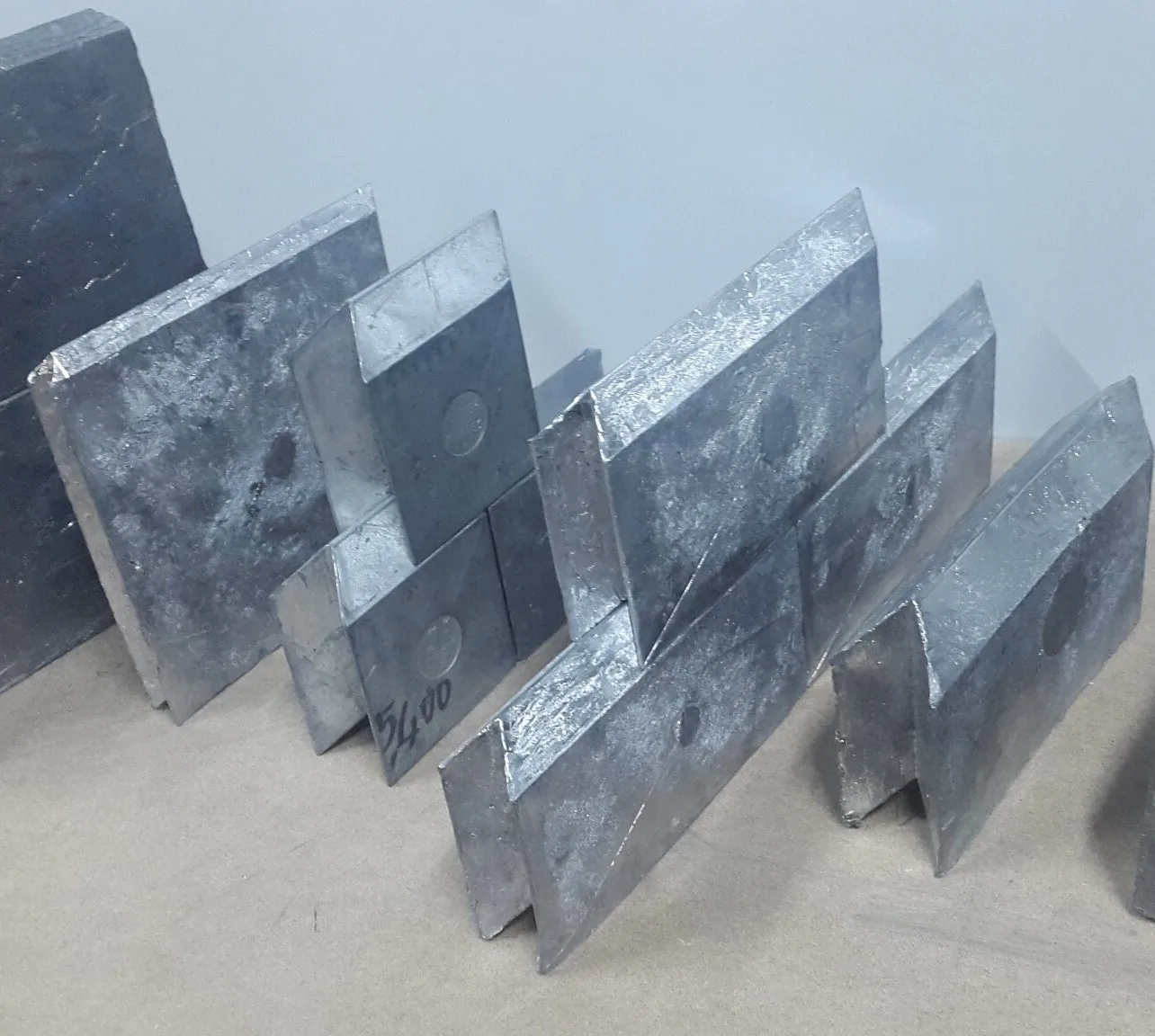
Lead is the reference material for photon shielding in doors and space-constrained locations. Its high density (11.34 g/cm³) and high atomic number deliver maximum attenuation in minimum thickness. At MSA Projecta we use virgin lead conforming to ASTM B-29, processed in-house with uniform thickness and a maximum 3% variation — because a thin spot in a lead layer is a radiation leak waiting to be found at acceptance testing. Depending on the project calculation, our LINAC doors carry 5–50 mm Pb equivalent photon shielding.
Concrete
Concrete is the workhorse of bunker walls, floors and ceilings: economical at large volumes and structural at the same time. Its drawback is thickness — high-energy primary barriers commonly require 1.5 to 2.5 meters of standard concrete. High-density or barite concrete reduces the footprint where space is tight.
Steel
Steel sits between concrete and lead in attenuation performance. In door construction it plays a dual role: it contributes to photon attenuation while providing the structural frame that carries the shielding layers — a door with 50 mm of lead equivalent can weigh several tonnes, and the steel structure is what makes it operable for decades.
How Door Photon Shielding Is Calculated
There is no catalog answer to "how much lead does my door need?" The specification comes out of a project-specific calculation that evaluates, at the door position:
- Photons scattered down the maze from the patient and the room walls (including multiple-bounce scatter)
- Head-leakage photons transmitted through the maze wall
- The workload (weekly dose delivered), use factor and the occupancy of the area outside the door
- The applicable dose limit — controlled versus uncontrolled area, per national regulations and NCRP/IAEA guidance
Each component is calculated, summed and compared to the design limit; the door's lead equivalence follows from the required transmission factor. Two hospitals with the same LINAC model can legitimately need very different doors, because their maze geometry, patient load and adjacent occupancy differ. Any supplier who quotes a door thickness without asking for your bunker drawings and beam data is guessing — and guesses fail licensing surveys.
Common Photon Shielding Mistakes We See in Real Projects
- Copying a specification from another site. Shielding is geometry-specific; "same machine, same door" is not a valid engineering argument.
- Ignoring IMRT/VMAT workload growth. Modulated techniques increase leakage workload; a door calculated for conventional treatment may be undersized for a modern clinical mix.
- Non-uniform lead installation. Attenuation is only as good as the thinnest point. Uniform, quality-controlled lead layers and overlap details at joints are essential.
- Forgetting penetrations. Cable ducts, HVAC openings and conduits near the entrance can bypass an otherwise perfect door if not routed and shielded correctly.
- Treating the door separately from the maze. Optimizing maze geometry first often reduces door cost substantially — door and bunker should be designed together.
What a Professional Photon Shielding Package Includes
When you work with an experienced radiation shielding partner, the door is delivered with a complete engineering and documentation trail:
- Shielding calculation report for the entrance per NCRP 151 methodology
- Material certificates — lead purity and thickness verification
- Shop drawings of the door construction and sealing details
- Installation by teams experienced in multi-tonne shielding assemblies
- Post-installation radiation survey support verifying the calculated performance
At MSA Projecta, every door ships with this documentation and a 100% shielding performance guarantee verified at installation — because for a hospital, the real deliverable is not a door: it is a licensing survey passed on the first attempt and decades of safe daily operation.
Photon Shielding and High-Energy Machines: One More Layer
If your facility operates — or may one day operate — at 15 MV or 18 MV, photon shielding is only half of the door design: photoneutron production above 10 MV adds a neutron attenuation requirement, typically solved with borated polyethylene layers combined with the lead core. You can read our dedicated guide on High Energy LINAC Shielding Design for the complete picture, and our comparison of Concrete vs Lead Shielding for material selection across the whole bunker.
Conclusion
Photon shielding is the universal requirement of radiotherapy facility design — present in every project, at every energy level, in every wall and every door. Effective photon protection is not a matter of adding "enough lead": it is the product of correct physics, project-specific calculation, quality-controlled materials and precise installation.
Whether you are planning a new treatment room, replacing a door in an operating clinic, or evaluating an energy upgrade, the right time to involve shielding engineers is at the design stage — when maze geometry, door specification and budget can still be optimized together.
If you would like a project-specific photon shielding assessment for your LINAC door, our engineering team reviews bunker drawings and beam data and responds with a technical evaluation within one business day.
Planning a radiotherapy shielding project?
Our engineers respond to technical inquiries within one business day — shielding calculations, door specifications and full project quotations.
Request a Technical Quote →