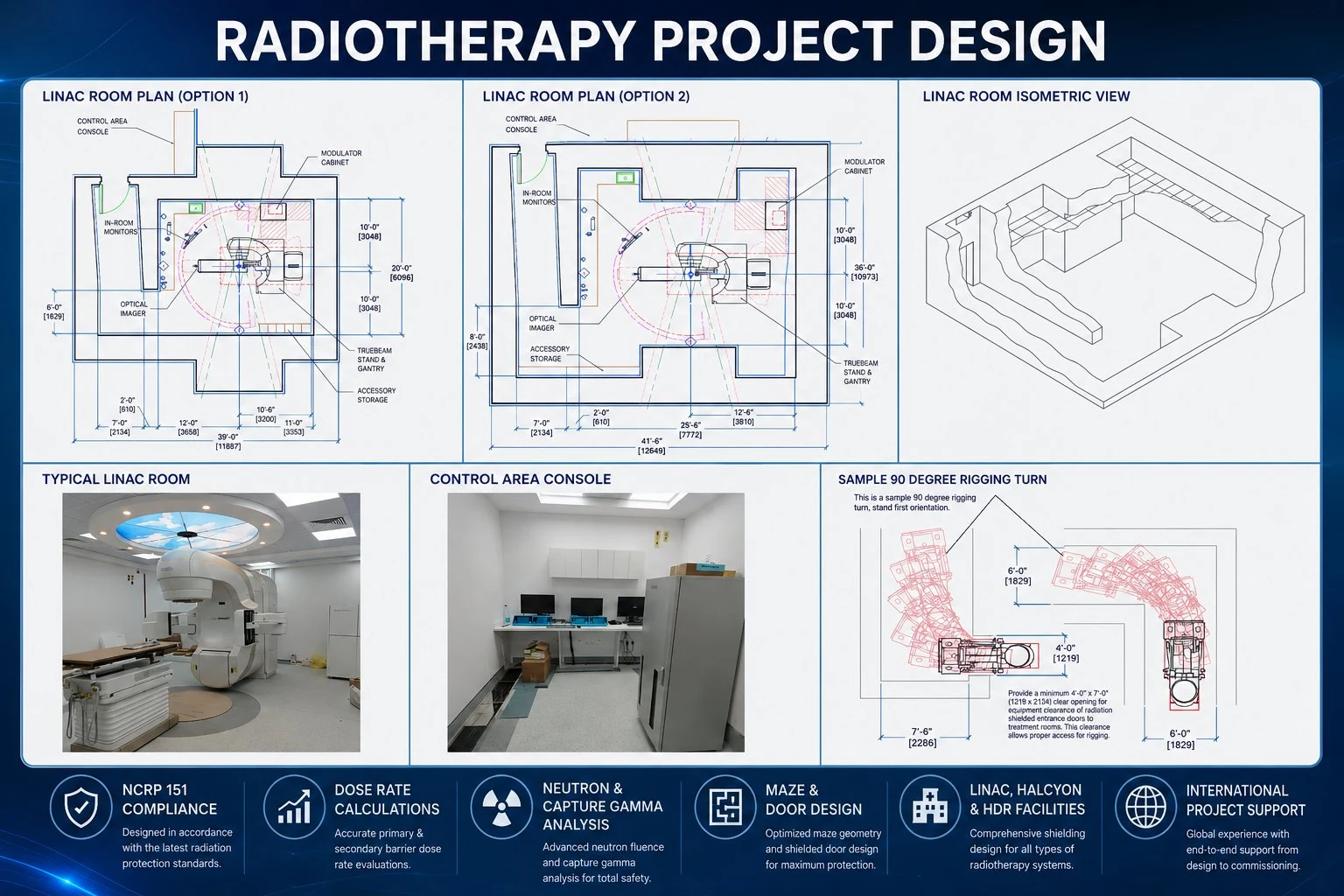
The Importance of High Energy LINAC Shielding Design
Modern radiotherapy facilities rely on high-energy linear accelerators (LINACs) to deliver precise and effective cancer treatments. While these advanced systems provide exceptional therapeutic benefits, they also generate significant levels of photon radiation and, at energies above 10 MV, secondary neutron radiation.
For this reason, proper High Energy LINAC Shielding Design is one of the most critical aspects of every radiotherapy project. A well-designed shielding system protects healthcare professionals, patients, visitors, and surrounding areas while ensuring compliance with international radiation safety standards.
Whether constructing a new cancer center or upgrading an existing radiotherapy department, effective shielding design directly impacts operational safety, regulatory approval, and long-term facility performance.
Understanding High Energy Radiation Challenges
Linear accelerators operating at 10 MV, 15 MV, 18 MV, or higher energies require specialized shielding solutions beyond conventional radiation protection methods.
Key challenges include:
- Primary photon radiation
- Secondary scattered radiation
- Leakage radiation
- Photoneutron production
- Controlled and uncontrolled area protection
- Occupational dose limitations
As treatment workloads continue to increase worldwide, shielding calculations must be performed with precision to ensure long-term compliance and operational efficiency.
Why Neutron Shielding Matters
When LINAC beam energies exceed approximately 10 MV, photoneutron production becomes a significant consideration.
Neutrons possess different physical characteristics compared to photons and require dedicated shielding materials such as:
- Borated polyethylene
- Borated paraffin
- Hydrogen-rich composite materials
- Specialized neutron attenuation systems
Without adequate neutron protection, radiation levels near treatment room entrances and occupied areas may exceed acceptable limits.
A comprehensive shielding strategy must therefore address both photon and neutron attenuation requirements.
Key Components of High Energy LINAC Shielding Design
Shielding Calculations
Accurate calculations form the foundation of every successful project.
Factors typically considered include:
- Maximum beam energy
- Treatment workload
- Use factor
- Occupancy factor
- Distance to occupied areas
- Regulatory dose limits
- Maze geometry
- Facility layout
Bunker Wall Design
Radiotherapy bunker walls are commonly constructed using:
- High-density concrete
- Barite concrete
- Reinforced concrete structures
- Additional localized shielding solutions
Proper wall thickness selection is essential to achieve required attenuation levels while optimizing construction costs.
Maze Design Optimization
An efficiently designed maze can significantly reduce radiation levels at the treatment room entrance.
Benefits include:
- Reduced door shielding requirements
- Lower project costs
- Improved operational efficiency
- Simplified installation processes
Radiation Shielding Doors
High-energy treatment rooms often require specialized radiation shielding doors incorporating:
- Lead shielding
- Neutron shielding materials
- Radiation-tight sealing systems
- Automated or manual operation options
Door design must be integrated with the overall bunker shielding concept to ensure complete radiation protection.
Compliance with International Standards
Professional LINAC shielding projects typically follow internationally recognized guidance documents and standards.
These may include recommendations from:
- NCRP
- IAEA
- ICRP
- National regulatory authorities
- Local radiation protection regulations
Compliance not only ensures safety but also facilitates licensing, acceptance testing, and long-term operation.
Engineering Expertise Makes the Difference
Successful shielding design requires more than theoretical calculations.
An experienced engineering team understands:
- Clinical workflow requirements
- Equipment-specific shielding challenges
- Construction constraints
- Mechanical integration requirements
- Radiation protection principles
- Installation and commissioning processes
The ability to combine radiation physics with practical engineering solutions is what transforms a compliant design into a successful clinical facility.
Comprehensive Solutions for Modern Radiotherapy Projects
From initial feasibility studies and shielding calculations to bunker construction support and radiation shielding door integration, comprehensive project management helps reduce risks and accelerate project timelines.
Modern radiotherapy centers demand solutions that are:
- Safe
- Efficient
- Regulatory compliant
- Cost-effective
- Future-proof
Choosing the right engineering partner ensures that every aspect of the shielding design supports the long-term success of the facility.
Conclusion
High Energy LINAC Shielding Design is a critical investment in the safety, compliance, and performance of any radiotherapy facility. Properly engineered shielding systems protect patients, staff, and surrounding environments while supporting efficient clinical operations.
As cancer treatment technologies continue to evolve, the demand for specialized expertise in high-energy radiation shielding will only increase. Working with experienced professionals ensures that your project meets the highest standards of safety, quality, and operational excellence from concept through commissioning.
If you are planning a new radiotherapy bunker, upgrading an existing treatment room, or evaluating neutron shielding requirements for high-energy LINAC systems, expert engineering support can help deliver a safe, compliant, and future-ready solution.
Planning a radiotherapy shielding project?
Our engineers respond to technical inquiries within one business day — shielding calculations, door specifications and full project quotations.
Request a Technical Quote →