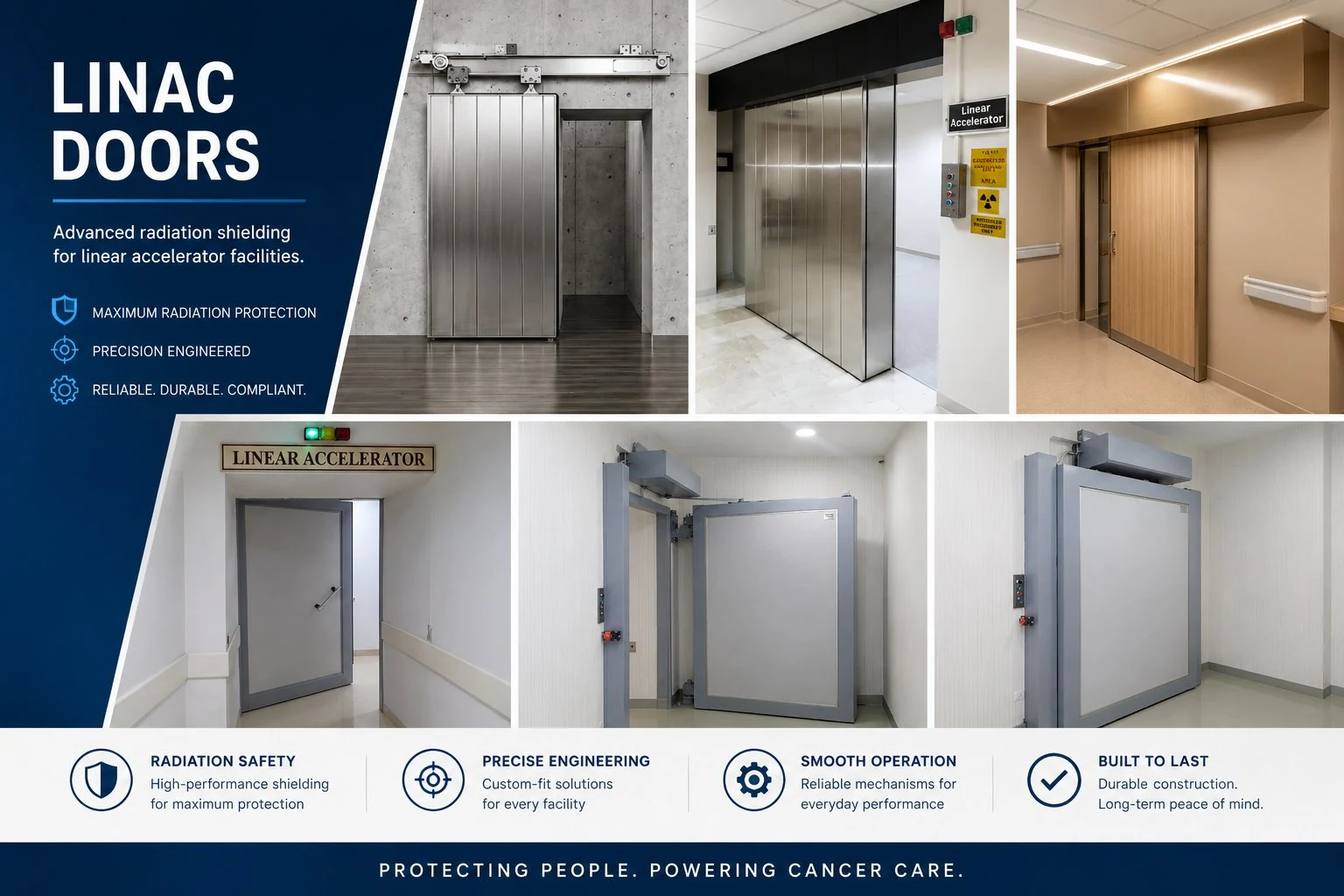
Understanding LINAC Doors in Modern Radiotherapy Facilities
A LINAC door (Linear Accelerator Door) is a specialized radiation shielding door designed to protect medical personnel, patients, and the public from ionizing radiation generated during radiotherapy treatments. Installed at the entrance of radiotherapy bunkers, LINAC doors play a vital role in ensuring compliance with international radiation safety standards while maintaining efficient clinical workflow.
As radiotherapy technology continues to evolve, modern treatment systems operating at higher photon energies require increasingly sophisticated shielding solutions. This makes the design, engineering, and installation of LINAC doors one of the most critical aspects of radiation oncology facility construction.
Why Are LINAC Doors Necessary?
Linear accelerators generate high-energy photon beams used to treat cancer patients. Depending on the energy level of the accelerator, additional neutron radiation may also be produced.
Without properly designed radiation shielding systems, unwanted radiation leakage can expose healthcare workers and surrounding areas to unnecessary radiation doses.
A properly engineered LINAC door provides:
- Radiation leakage protection
- Neutron attenuation (for high-energy accelerators)
- Compliance with national and international regulations
- Safe operation of radiotherapy facilities
- Long-term reliability and durability
Low-Energy vs High-Energy LINAC Doors
Low-Energy LINAC Doors
Systems operating below 10 MV typically require photon shielding only. These doors generally utilize lead shielding combined with structural steel construction.
Typical applications include:
- 6 MV Linear Accelerators
- Halcyon Systems
- Ethos Systems
- Certain Imaging Rooms
High-Energy LINAC Doors
Accelerators operating above 10 MV can produce photoneutrons, requiring both photon and neutron shielding.
High-energy LINAC doors typically incorporate:
- Lead shielding for photon attenuation
- Borated polyethylene or borated paraffin for neutron attenuation
- Structural steel reinforcement
- Radiation-tight sealing systems
These doors are commonly used in:
- 15 MV LINAC bunkers
- 18 MV LINAC bunkers
- High-energy radiotherapy centers
- Advanced oncology hospitals
Types of LINAC Doors
Sliding LINAC Doors
Sliding doors are ideal for facilities requiring:
- Large shielding thicknesses
- Maximum space efficiency
- Automated operation
- High patient throughput
Benefits include:
- Reduced operating force
- Improved safety
- Compact footprint
- Smooth integration with access control systems
Hinged LINAC Doors
Hinged shielding doors remain a preferred solution for many facilities due to:
- Simpler mechanical systems
- Lower maintenance requirements
- Cost-effectiveness
- Robust long-term performance
Key Factors in LINAC Door Design
Every radiotherapy bunker is unique. Door shielding requirements depend on several critical factors:
Beam Energy
Higher photon energies require increased shielding thickness and neutron protection.
Bunker Geometry
Maze design, wall thickness, and treatment room layout significantly affect door specifications.
Workload
The expected patient volume and treatment intensity influence shielding calculations.
Regulatory Requirements
National regulations and international guidelines such as NCRP and IAEA recommendations must be considered during the design phase.
Engineering Challenges in LINAC Door Manufacturing
Manufacturing a radiation shielding door involves far more than simply adding lead or neutron shielding materials.
Successful projects require expertise in:
- Radiation shielding calculations
- Structural engineering
- Mechanical design
- Door automation systems
- Installation logistics
- Quality assurance and testing
Each component must work together to provide reliable radiation protection while maintaining daily clinical functionality.
LINAC Door Installation and Project Management
The installation of a LINAC door is often one of the most complex phases of a radiotherapy construction project.
Critical considerations include:
- Structural load calculations
- Bunker access limitations
- Transport and rigging operations
- Alignment and commissioning
- Radiation leakage verification
Experienced project teams can significantly reduce installation risks and project delays.
Choosing the Right LINAC Door Partner
Selecting an experienced engineering partner is essential for the success of any radiotherapy project.
Key qualifications to consider include:
- Experience with both low- and high-energy LINAC systems
- Radiation shielding expertise
- International project references
- Manufacturing capabilities
- Installation and commissioning support
- Compliance with international standards
A reliable partner should be able to support the entire project lifecycle—from concept and shielding design to manufacturing, installation, and final acceptance testing.
Conclusion
LINAC doors are a critical component of every radiotherapy facility. Properly engineered radiation shielding doors not only ensure regulatory compliance but also protect healthcare professionals, patients, and the public from unnecessary radiation exposure.
Whether your project involves a low-energy treatment room, a high-energy LINAC bunker, or a comprehensive cancer center, selecting the right shielding door solution is essential for long-term operational success.
If you are planning a new radiotherapy facility, upgrading an existing bunker, or seeking specialized radiation shielding expertise, working with an experienced engineering team can help ensure the highest standards of safety, performance, and reliability.
Planning a radiotherapy shielding project?
Our engineers respond to technical inquiries within one business day — shielding calculations, door specifications and full project quotations.
Request a Technical Quote →